
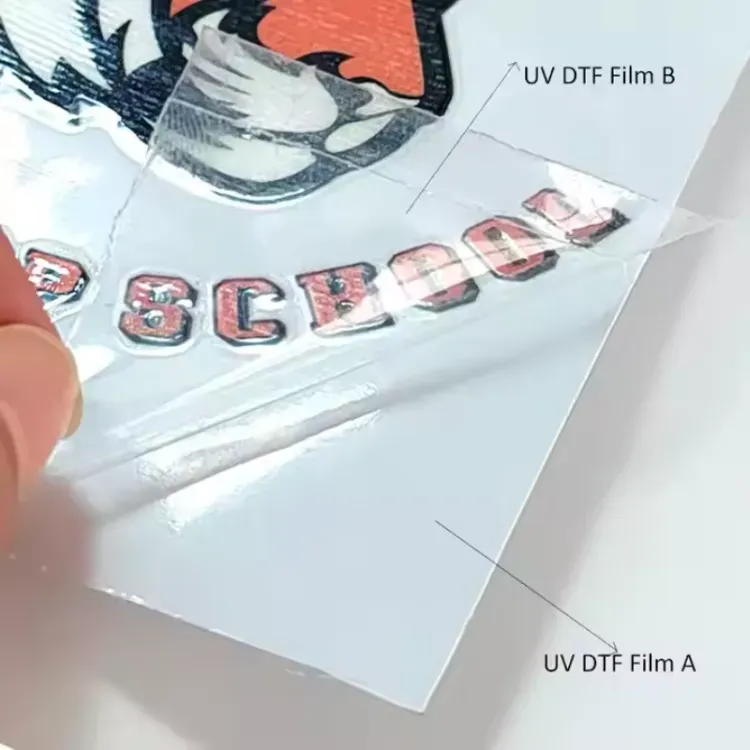
UV DTF transfer materials form the backbone of successful UV DTF printing, delivering vibrant color, crisp details, and durable adhesion across a wide range of fabrics, while guiding your workflow from concept to final product. Choosing the right UV DTF ink types can dramatically affect color gamut, drying performance, and how well designs hold on white underbases or colorful textiles, influencing texture, gloss, and wash resistance. DTF transfer film quality matters because it governs image sharpness, pigment balance, and wash durability, so look for films with consistent thickness, clean release, and stable dimensional properties under heat. A precise DTF printer setup minimizes misprints, optimizes color management, and reduces waste by ensuring proper nozzle health, alignment, media handling, and calibration across multiple production runs. By integrating these elements into a cohesive workflow, you can translate digital artwork into durable, wash-fast results that withstand repeated wearing and laundering, boosting consistency and customer satisfaction.
To frame the topic with alternative terms, think of ultraviolet direct-to-film media, UV-based transfer sheets, or digital transfer substrates that serve the same purpose as traditional UV DTF materials. These semantically related terms reflect how UV-curable inks, the transfer film, and bonding layers combine with a printer setup and finishing process to yield durable images. In practice, optimizing your workflow means focusing on substrate compatibility, curing behavior, and heat application strategies that preserve color fidelity on cotton, polyester, and blends. By adopting a flexible vocabulary and testing different combinations of media, you leverage related concepts that search engines recognize as relevant to DTF printing.
UV DTF Transfer Materials: Selecting Films, Inks, and Adhesives for Durable Transfers
Choosing UV DTF transfer materials sets the foundation for color accuracy, adhesion, and wash durability. This system includes the UV DTF transfer film, UV inks, the adhesive layer, and the carrier sheet that keeps everything stable during handling and transfer.
A well‑matched set of materials reduces color shifts and edge lift. Consider compatibility across fabrics such as cotton, polyester, and blends, and verify that the adhesive works with your chosen film and inks. Also plan for the heat press and curing steps to finalize adhesion.
DTF Ink Types and Color Management for Vibrant Results
UV DTF ink types vary in pigment load, brightness, and drying characteristics. Some inks maximize white underbases on dark textiles, while others push translucency for vibrant prints on light fabrics.
When selecting UV DTF ink types, evaluate color gamut, drying time, and adhesion to different fabrics. Always test on scraps using your transfer film to ensure the ink and film synergy yields stable color and wash durability.
DTF Transfer Film Quality: Thickness, Surface Finish, and Stability
DTF transfer film quality directly affects image sharpness and color integrity. Thicker films can hold more pigment and resist tearing, but may require adjusted heat and dwell times.
Look for films with consistent thickness, smooth surface, and good dimensional stability during cure. Also consider the white underbase layer if your designs rely on bright whites, and ensure compatibility with your UV inks and adhesive.
DTF Printer Setup Best Practices for Consistent Output
DTF printer setup is the stage where precision begins. Proper print head alignment, color calibration, and stable platen temperatures ensure predictable results.
Use dedicated RIP software to manage color management, ICC profiles, and film handling. Keep film clean and wrinkle-free, and set print speeds to optimize detail rather than throughput to avoid misprints.
DTF Heat Press Settings: Temperature, Time, and Pressure for Perfect Adhesion
DTF heat press settings determine how the design transfers from film to fabric. Properly calibrated temperature, time, and pressure ensure adhesion remains vibrant through washes.
Common starting points are 150–160 C (305–320 F), medium pressure, and a dwell time of about 10–15 seconds, followed by a cold or warm peel. Always run a test transfer to dial in settings for your fabric and film combination.
Curing Time and Post-Processing: Maximizing Durability After Transfer
Curing time and post-processing affect durability and feel. UV exposure, ambient conditions, and the adhesive set time influence wash resistance and long-term performance.
Check pigment and adhesive manufacturer guidelines for drying and curing times, and avoid handling until the bond matures. Allow the transfer to rest after printing to maximize bond strength and longevity.
Frequently Asked Questions
What role do UV DTF transfer materials play in achieving color accuracy and durability?
UV DTF transfer materials form an integrated system where the transfer film, UV DTF inks, adhesive, carrier sheet, heat press, and curing all influence color accuracy and wash durability. Always verify compatibility between inks and the transfer film, and run small test panels to confirm adhesion and brightness before larger batches.
What should I look for in UV DTF transfer film quality to ensure sharp images?
Look for UV DTF transfer film with consistent thickness, a smooth surface, and good dimensional stability during cure. Thicker films can hold more pigment but may require adjustments to heat and dwell time; consider whether your designs rely on a white underbase and how the film will interact with your inks.
How can I optimize my DTF printer setup when using UV DTF transfer materials?
Optimize DTF printer setup by ensuring precise print head alignment, accurate color calibration, and ICC profiles in your RIP workflow. Keep the UV DTF transfer film clean and flat, set speeds for crisp details, and verify any printer-specific settings (belts/platen temperature) to minimize misprints.
What are the recommended DTF heat press settings for UV DTF transfer materials?
Start with 305–320 F (150–160 C), medium pressure, and a dwell of about 10–15 seconds, followed by a cold or warm peel. Adjust these DTF heat press settings based on fabric type and film thickness, and always run a small test transfer to dial in the exact parameters.
How long should curing times be for UV DTF transfer materials to ensure durable results?
UV DTF inks cure quickly with UV exposure, but other materials may require additional post-processing. Follow the adhesive and film manufacturer guidelines for drying and curing times, allow the transfer to rest for a few hours at room temperature, and avoid washing until the bond has fully set.
What practical steps help maximize results when using UV DTF transfer materials?
Practical steps include starting with a clean, wrinkle-free surface, performing a light pre-press, ensuring even heat distribution, using a test panel to compare UV DTF ink types and film thickness, and documenting settings for different fabrics to repeat successful transfers.
| Topic | Key Points |
|---|---|
| Overview | UV DTF transfer materials are the foundation of high-quality transfers, covering the film, inks, adhesive, carrier sheet, heat press, and curing steps. |
| Core components | Main components include the UV DTF transfer film, UV DTF inks, adhesive or bonding layer, carrier sheet, heat press, and curing steps. |
| Ink types | Ink types can be tuned for different fabrics and finishes. Some inks optimize white underbases; others prioritize brightness on dark textiles. When choosing UV DTF inks, evaluate color gamut, drying time, and adhesion; test compatibility with your transfer film. |
| DTF transfer film | Film quality matters for sharpness and color integrity. Thicker films hold more pigment and resist tearing but may require adjustments in heat and dwell time. Look for consistent thickness, smooth surface, good dimensional stability during cure, and consider the white underbase for bright whites. |
| DTF printer setup | Before printing, ensure the printer is properly set up for DTF: head alignment, color calibration, and the right belt/platen temperature if supported. Use a dedicated DTF workflow with RIP software and ICC profiles. Keep the film clean, avoid wrinkles, and set print speeds for crisp details to reduce ink waste. |
| DTF heat press settings | Transfer temperature, time, and pressure determine adhesion. Common starting points: 305–320°F (150–160°C), medium pressure, and 10–15 seconds, followed by a cold or warm peel. Always run a test transfer to dial in settings for specific fabrics and films. |
| Curing times and post-processing | UV DTF inks cure quickly when exposed to the right UV light, but other materials may need post-processing. Follow pigment/adhesive manufacturer guidelines for drying and curing times, avoid handling until the adhesive sets, and consider resting the transfer for a few hours at room temperature. |
| Practical tips | Start with a clean, wrinkle-free surface; pre-press to remove moisture. Ensure even heat distribution across the press. Use a test panel to compare UV DTF ink types and film thickness. Record settings for different fabrics to repeat successful transfers. |
| Common mistakes | Not fully curing ink or adhesive before handling; using too much adhesive or excessive heat; cracking or peeling from over- or under-treatment; insufficient pressure or too short a dwell time. Develop a standard operating procedure for printer setup, film handling, heat press timings, and post-processing. |
| Choosing suppliers and materials | Choose suppliers offering consistent UV DTF transfer materials (film, inks, adhesives) with clear data sheets. Look for compatibility charts, warranty terms, and responsive support. Buy small test lots to compare color stability, adhesion, and wash durability across fabrics like cotton, polyester, and blends. |
| Safety, handling, and environmental considerations | Work in a well-ventilated area and use PPE when handling inks and powders. Store materials per manufacturers’ guidelines to avoid premature curing. Consider environmental impact and seek recyclable carrier sheets and responsibly sourced films when possible. |
| Real-world workflow example | 1) Design and color management: use accurate monitor profile; convert to ICC-friendly workflow. 2) Material prep: Unroll UV DTF transfer film, align white underbase if required, prepare adhesive. 3) Printer setup: Calibrate for color accuracy; check nozzle health; ensure correct film loading. 4) Printing: Print design with UV DTF inks per film guidelines. 5) Curing: Expose to appropriate UV light if using UV-curable inks. 6) Transfer: Align on fabric, apply heat press at recommended temp/time, peel as directed. 7) Post-processing: Let garment cool, consider a short post-press to mature bond. 8) Quality check: Inspect color fidelity, adhesion, edge durability. 9) Documentation: Record settings for future projects. |
Summary
UV DTF transfer materials form the foundation of high-quality transfers. By understanding the roles of the transfer film, inks, and adhesives, and by dialing in printer setup and heat press settings, you can consistently achieve vibrant images that stand up to washing and wear. Invest time in tests, document your findings, and refine your process to match your fabrics and artwork, building a reliable workflow around UV DTF transfer materials for repeatable results and happier customers.