
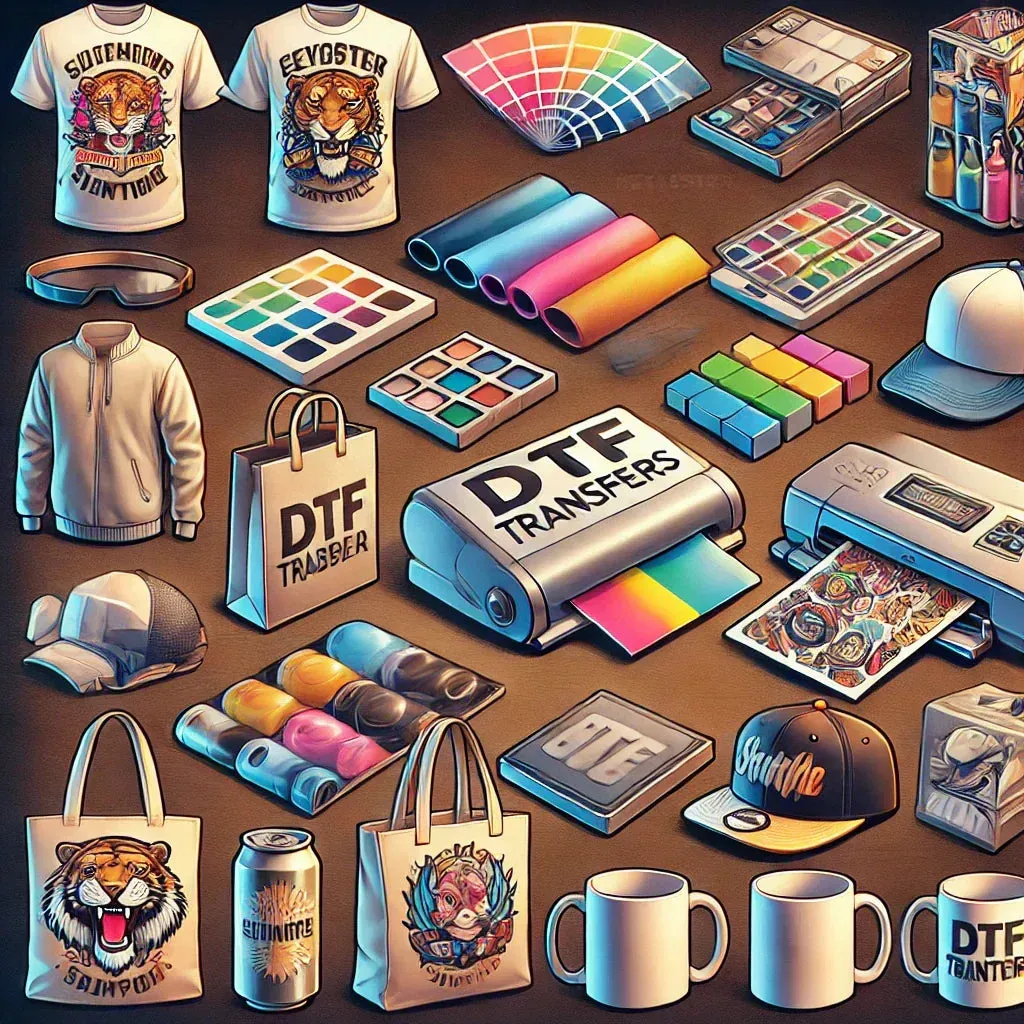
DTF materials have emerged as a versatile backbone for apparel printing, offering a reliable path from design to durable garment transfers. By using DTF films, DTF powders, and DTF adhesives, creators can achieve vibrant colors and wash-fast results across blends and fabrics. This overview of Direct-to-film printing materials highlights the roles of each component and how they work together to deliver crisp detail and lasting performance. When calibrating color, texture, and production speed, selecting the right combination of materials is as crucial as choosing the printer and RIP settings. Whether you’re a hobbyist or a production shop, understanding how DTF materials interact helps you optimize efficiency, yield, and customer satisfaction, while maintaining consistency across runs, including considerations of DTF transfer compatibility.
Beyond the term DTF materials, the concept is expressed through direct-to-film systems, transfer films, and powder-coated adhesives that perform the same job on fabrics. In this framing, you’ll hear references to transfer films, DTF powders, and DTF adhesives as the core trio that makes the image transfer possible, along with the idea of direct-to-film printing materials as the broader category. This approach aligns with DTF transfer compatibility considerations: how well different fabrics, colors, and finishes respond to a given film, powder, and adhesive combination. By using these related terms, you can explore supplier data, alternative film chemistries, and process parameters without losing track of the underlying workflow.
DTF Films: Selecting the Foundation for Vibrant Transfers
DTF films form the substrate that carries your printed design through heat and pressure. When evaluating film types, consider PET-based materials, thickness ranges (roughly 12 to 25 microns), and finishes that balance print quality with durability. White printable films are particularly useful for dark fabrics because the white base helps colors pop, while clear transfer films can be advantageous for lighter garments or specialty effects. Release properties and anti-static layers can reduce dust and improve powder adhesion, ensuring a more uniform transfer.
Compatibility matters: not every DTF film works the same with every DTF powder or adhesive. Matching the film to your printer, ink system, and fabrics will yield more consistent color and adhesion. For mixed fabric runs, carrying both white printable and clear film options allows you to optimize for each substrate. Testing each film against your chosen powder and adhesive formulations helps establish reliable heat, dwell, and pressure settings for durable, vibrant transfers.
DTF Powders: Bonding Chemistry, Texture, and Application
DTF powders sit at the heart of the bond between film and fabric. Bonding powders fuse the printed image to the garment during heat pressing, while finishing or separator powders can influence texture and surface smoothness. Particle size and flowability matter: uniform particles promote even coverage and reduce clumping, which translates to consistent adhesion across the design.
Application method and curing dynamics are critical. Powders are typically applied with a hopper or shaker, sometimes requiring a second pass to strengthen adhesion or achieve a specific finish. Calibration of cure temperatures and dwell times to your powder’s bonding profile ensures strong, durable transfers. Humidity control and proper storage prevent clumping and preserve flow during application.
DTF Adhesives: Maximizing Durability and Wash Fastness
DTF adhesives influence how well a transfer holds up under washing and abrasion. Some systems rely on adhesive properties activated during curing, while others incorporate adhesive layers directly into the film. Understanding the adhesive mechanism helps set the correct heat and pressure parameters to avoid color shift or tackiness.
Fabric compatibility and safety are also key considerations. Choose adhesives that align with your primary substrates—cotton, polyester, blends, or performance fabrics—and follow safety data guidelines for handling. When used alongside powders, ensure curing steps don’t degrade the adhesive chemistry or compromise color vibrancy, and validate wash durability through real-world wear tests.
DTF Materials: A Holistic View of Direct-to-Film Printing Materials
DTF materials encompass films, powders, and adhesives in a combined workflow that also involves printers, RIP software, and color management. A holistic view emphasizes how each component interacts with others to influence color accuracy, edge detail, and overall durability. Practical optimization starts with calibrating color profiles to the optical properties of your chosen film and powder, ensuring the design translates faithfully from screen to garment.
Beyond individual components, consider storage, humidity, and safety across the entire material system. White and dark fabrics react differently to materials, so build a swatch library that tests film types, powders, and adhesives on representative substrates. Documenting heat settings, pressure, and curing profiles creates a repeatable workflow that maintains consistency across batches and expansions into new fabrics.
DTF Transfer Compatibility: Fabrics, Colors, and Longevity
DTF transfer compatibility depends on fabric composition, weave, color, and pre-treatment. Light fabrics may benefit from translucent or white-printed films, while dark fabrics often require white background prints to maintain color vibrancy. Calibration is essential to compensate for the deeper color depth on darker textiles, ensuring consistent results across materials.
Texture, wash performance, and environmental factors all influence compatibility. Highly textured or brushed fabrics can affect powder adhesion and the final appearance, particularly on high-pile materials. Conduct wash and wear tests to assess colorfastness, edge integrity, and durability, and adapt dwell time or temperature as needed to maintain long-term transfer integrity.
Testing, Quality Control, and Maintenance for Consistent DTF Results
A robust testing regime helps ensure consistent DTF results. Swatch testing builds a library for each fabric type using your chosen film, powder, and adhesive, enabling evaluation of color vibrancy, edge definition, and texture before committing to full runs. Regular bond-strength checks after pressing can reveal adhesion issues that warrant adjustments to cure profiles or material selections.
Ongoing quality control should include wash testing, dimensional stability checks, and end-user wear evaluations. Document heat settings, pressures, and material combinations to create repeatable processes. Maintenance practices—proper storage of films, dry storage for powders, and adequate ventilation when heating materials—protect both product quality and operator safety.
Frequently Asked Questions
What role do DTF films play in direct-to-film transfers?
DTF films are the foundation of the transfer; they carry the printed design and influence release, durability, and how well DTF powders and DTF adhesives bond. When selecting DTF films, choose a PET-based option with a thickness around 12–25 microns and decide between white printable or clear transfer film based on fabric color. Also consider release and anti-static properties and ensure film compatibility with your DTF powders and DTF adhesives.
How do DTF powders affect bond strength and transfer quality?
DTF powders form the adhesive layer that fuses the design to fabric during heat pressing. Bonding powders drive adhesion; finishing or separator powders influence texture. Particle size and flowability affect coverage, while the application method and curing temperature/time determine final strength. Calibrate heat, dwell, and pressure for your powder with your film and DTF adhesives, and store powders dry to avoid clumping.
What should you consider when selecting DTF adhesives?
DTF adhesives can be powder-activated or integrated into films; understand the adhesive mechanism to set heat and pressure correctly, and assess wash fastness and durability for your fabrics. Check compatibility with cotton, polyester, blends, and performance fabrics, and review safety guidelines for handling adhesives. Also ensure compatibility with your chosen DTF powders and DTF films in the workflow.
What does 'Direct-to-film printing materials' mean, and how can I optimize them?
Direct-to-film printing materials describe the full system—DTF films, DTF powders, and DTF adhesives—and how they interact with your printer and RIP workflow. To optimize, calibrate color using RIP profiles that account for film and powder properties, test across fabrics, manage humidity, document heat and pressure settings, and follow safety guidelines.
How does DTF transfer compatibility vary across fabrics and colors?
DTF transfer compatibility depends on fabric composition, weave, pre-treatment, and fabric color. For light fabrics, translucent or white-printed film may suffice; for dark fabrics, white prints can improve vibrancy but require calibration. Texture or high-pile fabrics can affect powder adhesion; always perform wash and wear tests and consider environmental conditions to assess DTF transfer compatibility.
What is a practical testing and quality-control plan for DTF materials?
Establish a testing regime across the DTF materials—films, powders, and adhesives. Use swatch testing for each fabric with your chosen material stack, perform bond-strength checks after pressing, and run wash tests for colorfastness and substrate compatibility. Monitor dimensional stability, collect end-user wear feedback, and maintain a material library with recommended heat settings and fabric compatibility for future planning.
| Aspect | Key Points | Notes/Considerations |
|---|---|---|
| DTF Materials Overview | DTF printing uses three main material groups: films, powders, and adhesives. These enable vibrant, durable transfers and require alignment with printers and workflows. | Focus on how the three materials interact to optimize image vibrancy, durability, and production efficiency. |
| DTF Films | PET-based films (typically 12–25 microns) with white printable or clear transfer options; release/anti-static properties; and adhesive compatibility. | Test both white printable and clear films; match film choice to printer, ink, and fabrics. |
| DTF Powders | Bonding powders fuse print to fabric; finishing powders influence texture. Key factors include particle size, flowability, and application method. | Calibrate curing dynamics and humidity sensitivity; start with recommended powders for your film and test across fabrics. |
| DTF Adhesives | Adhesive mechanism may be powder-activated or film-integrated; focus on wash fastness, fabric compatibility, and safety. | Ensure compatibility with powders and films; adjust heat/pressure to maintain color and bond quality. |
| Workflow & System Integration | Interplay between film, powder, and adhesive is critical along with printer and color management. Calibrate through testing and documentation. | Handle humidity/storage and keep a log of settings for fabrics and designs. |
| Material Selection & Compatibility | Define core fabrics and colors; begin with vendor-tested pairings; balance cost vs. performance; plan for growth with scalable systems. | Develop a testing protocol and a material library for quick reference. |
| Testing & Quality Control | Swatch testing, bond strength, wash tests, dimensional stability, and end-user wear tests. | Document outcomes to drive process improvements. |
| Maintenance & Safety | Proper storage, ventilation, area cleanliness, operator training, and a material library. | Follow safety guidelines and maintain organized inventory. |
Summary
HTML table provided above outlines the key points of DTF materials: films, powders, and adhesives, and how they integrate into the broader DTF workflow. The table highlights factors such as film thickness, powder bonding vs finishing, adhesive mechanisms, workflow calibration, material compatibility, testing, and safety to help optimize vibrant, durable transfers.