

UV DTF transfer is redefining how brands approach on-demand graphics, delivering vivid color and durable finishes on a wide range of fabrics and surfaces. By blending the reliability of traditional DTF with the immediacy of UV-curable inks, this process yields sharp detail and a comfortable hand feel ideal for apparel. When evaluating options, many designers compare DTF vs UV DTF transfer to balance durability, wash-fastness, and production efficiency. In practice, UV DTF printing on fabrics and UV DTF printing for apparel let brands apply bold artwork to light and dark textiles with minimal underbase work, expanding UV DTF transfer applications across product lines. Beyond clothing, UV DTF transfer for home decor opens opportunities for cushions, curtains, and wall textiles with vibrant, long-lasting graphics.
Viewed through the lens of modern printing technology, this approach can be described as a UV-curable direct-to-film workflow using specialized films, primers, and heat-press adhesion. Other terms you may see include UV-curable film transfer, direct-to-film with UV inks, and UV-based textile printing, all pointing to the same family of processes. The appeal lies in vibrant color reproduction, fine detail, good stretch after transfer, and compatibility with a wide range of fabrics and coated surfaces. For on-demand brands, the key advantages are speed, lower setup costs for small runs, and the ability to experiment with complex designs across apparel and home decor. As the technology matures, expect closer integration with design software, better substrate compatibility, and more eco-friendly ink formulations.
Understanding UV DTF transfer: How it works and how it compares to DTF
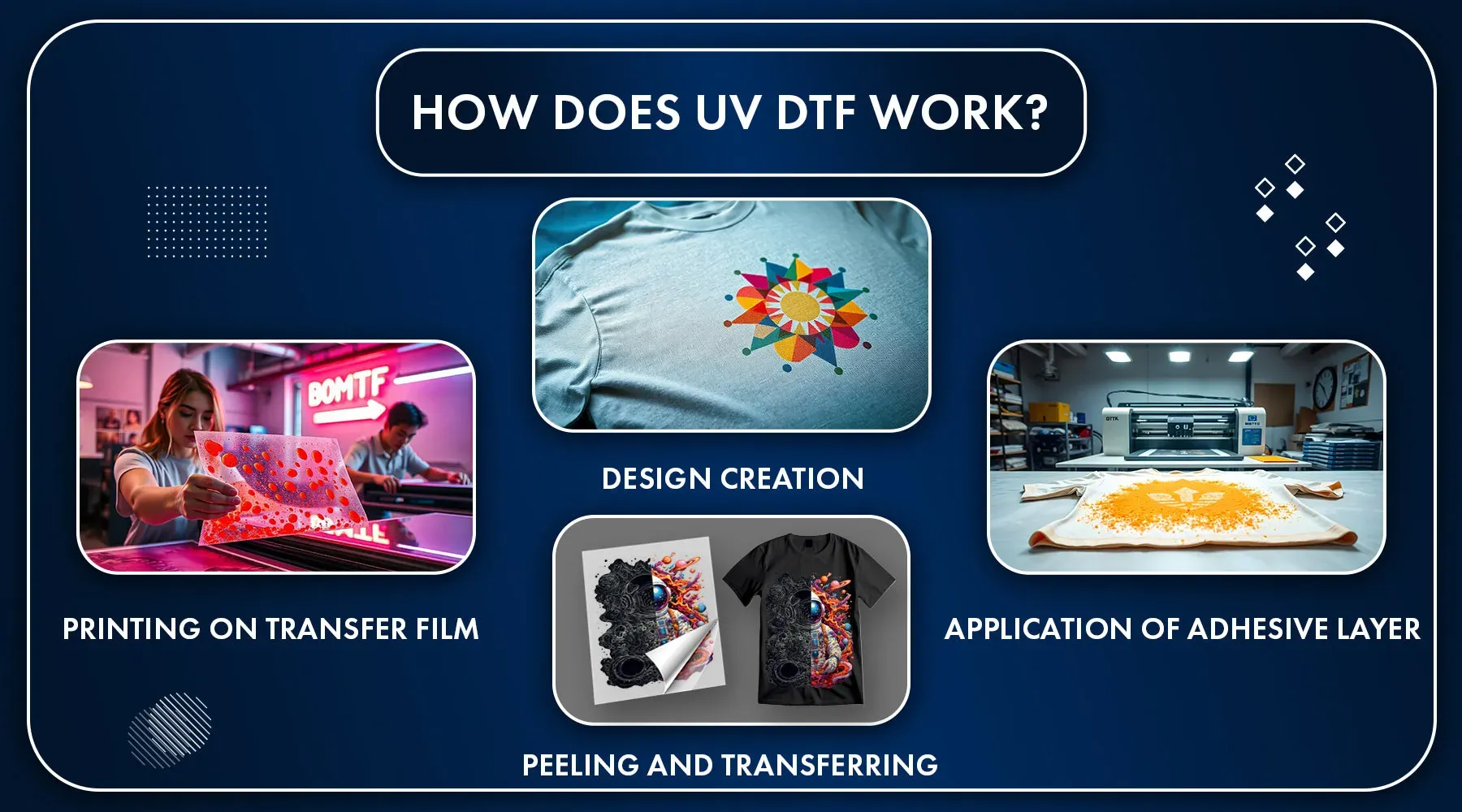
UV DTF transfer uses a direct-to-film workflow that employs UV-curable inks. After printing, a curing or post-cure step fixes the image before transferring it to a substrate with heat and pressure. This approach blends the precision of DTF with the fast setting of UV inks, enabling vibrant graphics on a wide range of materials.
When we compare UV DTF transfer to traditional DTF, differences in ink chemistry and curing impact color saturation, edge sharpness, and hand feel. The UV-curable inks often offer crisper detail and good adhesion on both fabrics and non-fabric substrates, leading to a DTF vs UV DTF transfer decision that depends on intended application and production workflow.
UV DTF printing for apparel: color, durability, and design possibilities
Apparel design benefits from the high color vibrancy and fine detail achievable with UV DTF printing for apparel. The technique supports intricate gradients, photographic imagery, and text with clean edges on T-shirts, hoodies, and performance wear.
The durability of UV DTF prints on garments is enhanced by the hard-curing inks and strong adhesion to fabrics. This makes the method suitable for both light and dark fabrics, with select cases requiring limited underbase work for optimal color reproduction and a soft hand feel.
UV DTF transfer applications across products: from apparel to home decor
UV DTF transfer applications span apparel, home textiles, and accessory items, enabling on-demand customization with consistent color and durability. Designers can create limited runs and personalized items without traditional setup costs.
Beyond clothing, UV DTF transfer for home decor includes pillow covers, curtains, and fabric wall art. The technology supports varied substrates and finishes while maintaining edge clarity and wash resistance across consumer products.
UV DTF printing on fabrics: substrate compatibility, color management, and durability
A core consideration for UV DTF printing on fabrics is substrate compatibility. Natural fibers like cotton and linen respond differently from synthetics or blended fabrics, influencing adhesion, color accuracy, and hand.
Color management and ink curing are critical to predictable results. Calibrated profiles, underbase strategies for dark fabrics, and post- cure settings help maintain vibrant hues and wash durability across garment and decor applications.
UV DTF transfer for home decor: cushions, curtains, and wall textiles
In home decor, UV DTF transfer offers vibrant, durable prints on textiles such as cushion covers, throws, curtains, and upholstery accents. The ability to print intricate imagery with strong color fidelity makes it ideal for custom decor lines.
Durability in decor requires proper substrate prep and finish selection. In addition to fabric compatibility, ensuring that adhesives and heat settings are optimized helps minimize cracking or edge lifting in frequently handled items.
Best practices for a reliable UV DTF workflow
Establish a repeatable workflow by testing substrates with swatches before full production. Use high-resolution artwork and optimize white underbase on dark fabrics to ensure vibrant, edge-to-edge color reproduction.
A robust process includes precise heat and pressure control, proper curing times, and a clear care guide for end users. Regular color profiling, substrate testing, and monitoring for adhesion and hand feel help sustain quality across runs.
Frequently Asked Questions
What is UV DTF transfer and what are its key UV DTF transfer applications?
UV DTF transfer is a direct-to-film process that uses UV-curable inks to bond vibrant graphics to fabrics and surfaces. Its key UV DTF transfer applications include apparel, home decor, accessories, and other compatible substrates, enabling on-demand customization with strong color and durability.
How does UV DTF printing for apparel compare to traditional methods in terms of color vibrancy and durability?
UV DTF printing for apparel delivers high color saturation and crisp detail on both light and dark fabrics, often with a softer hand feel. Compared to traditional screen printing or heat transfers, it offers quicker setup for small runs and durable washes without heavy underlays.
DTF vs UV DTF transfer: what are the main differences when choosing a solution for fabrics?
DTF vs UV DTF transfer differ in ink chemistry, curing requirements, and substrate compatibility. UV DTF uses UV-curable inks with a curing step for vivid colors and strong adhesion, while standard DTF may rely on different inks and post-processing. Choice depends on fabric type, color needs, and production scale.
Is UV DTF printing on fabrics suitable for home decor items like cushions and curtains?
Yes, UV DTF printing on fabrics is well-suited for home decor, including cushions, curtains, and other textiles, delivering durable, vibrant designs. Consider fabric type, adhesion, wash durability, and appropriate post-processing to maximize color fastness.
What factors influence UV DTF transfer for home decor projects and how can you optimize adhesion on non-fabric surfaces?
Key factors include substrate type, surface preparation, adhesive formulation, and curing conditions. For home decor projects on non-fabric surfaces, test adhesion on coated materials, use compatible primers, and fine-tune cure times to maximize bond strength and color retention.
What are common quality issues with UV DTF transfer and how can I troubleshoot edge halos or cracking in apparel prints?
Common issues include edge halos, cracking, and color shifts. Troubleshoot by verifying color profiles and white underbase, ensuring consistent heat and pressure, confirming substrate readiness, and running test prints to dial in cure time and adhesion before full production.
| Aspect | Key Points |
|---|---|
| What is UV DTF transfer? | Direct-to-film workflow using UV-curable inks; a design is printed on a UV-curable film and transferred to a substrate under heat and pressure, delivering vibrant color, sharp detail, and strong adhesion across many fabrics and surfaces. |
| Advantages | High color vibrancy on light and dark fabrics; durable prints; minimal underbase for dark substrates; efficient workflow suitable for small-batch or on-demand production. |
| Typical process steps | Design artwork → print on UV-curable film → cure or post-cure → apply adhesive → transfer with heat and pressure to the chosen substrate. |
| Apparel applications | T-shirts and sweatshirts; activewear; hats, bags, and accessories; supports fine details and wide color ranges, even on dark fabrics. |
| Home decor and beyond | Pillows, curtains, upholstery accents, and wall art fabrics benefit from vivid color and durable prints that withstand regular handling. |
| Other substrates | Coated materials, leather or faux leather, wood panels, PVC, and select ceramics can accept UV DTF transfers with appropriate surface prep and adhesives; always test adhesion. |
| Quality control & care | Test swatches, verify cure, check edge crispness, and provide care guidance to maintain vibrancy and durability during washing and use. |
| Sustainability & future trends | On-demand production reduces waste; evolving inks and cure times; expanding substrate compatibility and workflow optimizations for faster times-to-market. |
Summary
UV DTF transfer is a versatile method that blends vibrant color, durability, and substrate versatility. From apparel to home decor and beyond, it enables high-quality graphics on fabrics and coated surfaces with UV-curable inks and a heat-transfer step. By understanding substrate compatibility, optimizing color management, and following practical processing tips, UV DTF transfer can support on-demand production, diverse product lines, and sustainable printing practices.