
UV DTF transfer is redefining how designers approach fabric graphics, delivering vibrant color, sharp details, and faster turnarounds. In the broader world of custom apparel printing, this UV-based method sits alongside traditional DTF transfer and DTG as a versatile option for a wide range of fabrics, from soft cotton jerseys to rugged poly blends, appealing to boutique labels and mass merchandisers alike while supporting color management and reliable wash durability. Compared with traditional heat transfer, the UV-based option offers higher color fidelity, finer edges, and a durable bond that resists cracking after washing, while maintaining a comfortable print surface on a broad spectrum of garment weights. For designers, achieving consistent results is aided by workflow considerations, from image resolution and color management to choosing fabrics like cotton, blends, or synthetics, and by establishing robust curing and transfer parameters that reduce misalignment or edge fringing. As brands explore on-demand strategies, this technology complements existing tools used in DTF printing, DTG and heat transfer workflows, expanding possibilities for custom apparel printing across on-trend graphics and practical production, and enabling smaller studios to compete with larger facilities through faster setup and shorter lead times.
UV DTF Transfer: A Brighter Future for Custom Apparel Printing
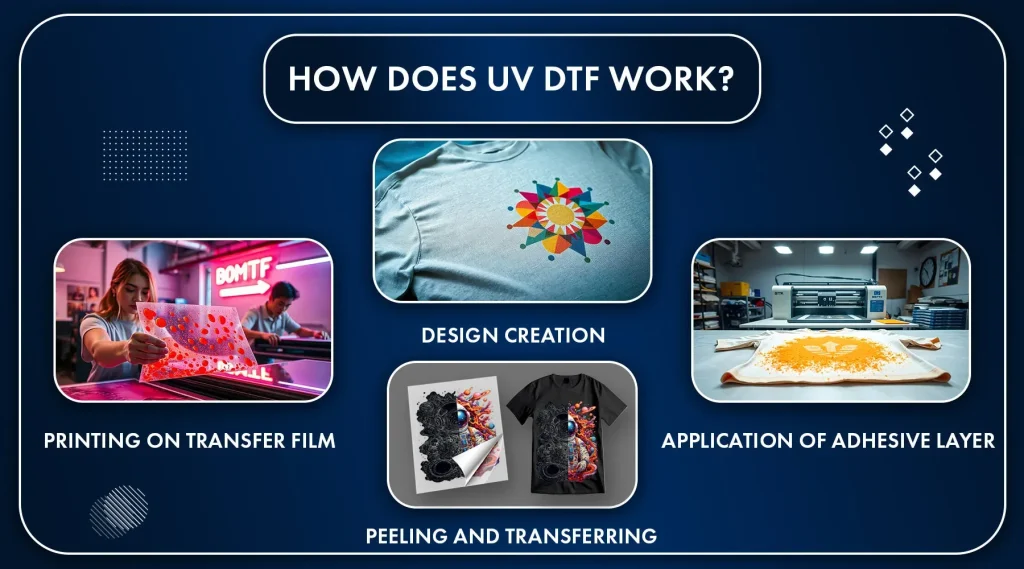
UV DTF transfer combines a Direct-to-Film workflow with UV-curable inks, enabling instant curing under ultraviolet light and delivering vibrant, durable prints on a wide range of fabrics.
This approach can yield brighter whites on dark fabrics, sharper edges, and strong wash-fastness when the ink is properly cured, making it a compelling option in the broader landscape of DTF transfer and heat transfer.
For designers and print shops pursuing on-demand apparel, UV DTF transfer offers color fidelity, production speed, and substrate flexibility that fit within the custom apparel printing toolkit alongside traditional DTF printing and DTG.
DTF Transfer vs DTF Printing: Core Differences for Designers
DTF transfer vs DTF printing represents a core workflow distinction that designers should understand when planning a project.
DTF printing typically uses water-based inks on film with a powder adhesive, while UV DTF transfer uses UV-curable inks that cure instantly, affecting color saturation and edge clarity.
The choice impacts equipment investments, ink chemistry, and how each method performs on different fabrics, influencing decisions in the context of custom apparel printing and competition with DTG.
Maximizing Fabric Compatibility with UV DTF Transfer Across Textiles
Maximizing fabric compatibility is a key strength of UV DTF transfer, which can perform reliably on cotton, polyester, blends, and performance fabrics.
The film-based transfer often yields strong opacity on dark fabrics and maintains color fidelity on synthetics where DTG pretreatment may be required, making it a versatile option in custom apparel printing.
This versatility supports diverse applications from streetwear to promotional items and team wear, expanding the designer’s and printer’s reach.
DTG, Heat Transfer, and UV DTF: Choosing the Right Method for Each Project
DTG, heat transfer, and UV DTF are not interchangeable; choosing the right method depends on fabric, color, and finish goals.
On airy, soft-hand 100% cotton, DTG can shine, while UV DTF transfer offers durability, opacity, and high-resolution imagery on dark materials.
Heat transfer remains cost-effective for small runs in some cases, but may show edge fringing or cracking if not applied with care, whereas UV DTF can reduce these concerns in the right setup.
Workflow Excellence: Best Practices for UV DTF Transfer in Studio Environments
Workflow excellence begins with calibrated color profiles and reliable ICC data tailored to your UV inks, ensuring consistent results across runs in the DTF transfer workflow.
Prepare high-resolution artwork (300 dpi or higher) and stabilize garments properly to prevent shifts during heat pressing, then run test transfers on representative fabrics.
Quality assurance should cover white underbase visibility on dark fabrics and routine UV lamp maintenance to keep curing output stable and predictable in custom apparel printing.
Sustainability and Economics: Scaling UV DTF Transfer for On-Demand Custom Apparel
Sustainability and economics come into play as on-demand UV DTF transfer reduces waste and enables rapid customization in custom apparel printing.
While upfront costs for UV ink systems and curing lamps exist, the ability to produce small runs with minimal setup can lower per-unit costs and support scalable micro-batch production when comparing with DTF printing and heat transfer.
This model often delivers faster turnaround and predictable quality, helping brands manage inventory and compete in the market alongside DTG and traditional methods.
Frequently Asked Questions
What is UV DTF transfer and how does it differ from traditional DTF transfer and DTF printing?
UV DTF transfer uses UV-curable inks printed on a film, cured instantly with UV light, and then heat-pressed onto fabric. Compared to traditional DTF printing (water-based inks on film with powder adhesive), UV DTF offers brighter color, crisper edges, higher opacity on dark fabrics, and faster curing, though it requires UV ink systems and curing lamps.
Can UV DTF transfer be used for custom apparel printing on dark fabrics?
Yes. UV DTF transfer is well-suited for custom apparel printing on dark fabrics due to strong opacity and color vibrancy. Plan for white underbase on dark textiles and run test transfers to confirm coverage and wash durability.
Which fabrics are best suited for UV DTF transfer in custom apparel printing?
UV DTF transfer works well on cotton, polyester, blends, and performance materials, including synthetics that water-based inks may struggle with, making it versatile for a wide range of fabrics in custom apparel printing.
How does UV DTF transfer compare to DTG printing in terms of hand feel, durability, and workflow?
DTG prints embed color in fibers, often delivering a softer hand on 100% cotton. UV DTF transfer prints on a film and bonds to the surface, typically offering higher opacity and durability across a broader fabric range, though the hand feel can be stiffer and the workflow includes UV curing steps.
Is UV DTF transfer cost-effective compared to heat transfer for small runs?
For small runs and on-demand custom apparel printing, UV DTF transfer can reduce setup time and per-unit costs versus some heat transfer methods, but initial investments in UV ink systems and curing lamps should be weighed against expected volume and substrates.
What design and workflow practices maximize quality in UV DTF transfer?
Use calibrated color profiles and high-resolution artwork (300 dpi), plan for white ink on dark fabrics, and conduct test transfers across fabrics (cotton, polyester, blends). Ensure proper stabilization, optimal curing temperature/time, and smooth edge fidelity to achieve consistent UV DTF transfer results.
| Aspect | Key Points |
|---|---|
| What is UV DTF transfer? | Direct-to-Film workflow using UV-curable inks; inks cure instantly under UV light; prints on a film and is transferred to fabric with heat. Results are high-resolution, vibrant, durable, and suitable for many fabrics, including synthetics. |
| Why it’s gaining traction | Color vibrancy, fabric compatibility, durability and wash-fastness, faster curing, and a film-based workflow ideal for small runs and on-demand orders; potential cost and scalability benefits. |
| UV DTF vs DTF printing | UV DTF uses UV-curable inks with instant cure and higher color saturation/edge sharpness; reduces smearing; has higher upfront equipment costs; both share a film-based workflow. |
| UV DTF vs DTG | DTG embeds color into fibers (often softer on 100% cotton); UV DTF bonds a printed film to fabric (slightly stiffer hand); better opacity and color on dark fabrics; good for synthetics and blends. |
| UV DTF vs heat transfer | UV DTF offers higher color fidelity, more detail, and a smoother finish; heat transfer can be cost-effective for small runs but may crack if applied poorly; UV DTF yields durable, photographic-quality images. |
| Applications | Apparel lines (streetwear, sportswear), promotional merchandise, team wear, and accessories on a wide range of fabrics. |
| Design considerations | Color management, image resolution, substrate composition; plan for white ink handling on dark fabrics; use vector logos for clean edges. |
| Workflow tips | Calibrated color profiles, high-resolution artwork (≥300 dpi), proper stabilization, validate white under base on dark fabrics, and conduct test transfers on representative fabrics. |
| Sustainability & cost | On-demand production reduces waste; lower solvent exposure with UV inks; potentially recyclable film substrates; upfront UV ink system costs offset by small-batch efficiency. |
| Future trends | Expanded fabric compatibility, improved white ink performance on dark garments, automation, softer hand feels, and stronger on-demand manufacturing workflows. |
| Quality control | Structured QA with UV radiometer checks, edge fidelity, color checks; address misalignment, cracking, or color shifts via registration, curing, and maintenance. |
| Industry case study | A mid-sized label saw shorter production cycles, improved color saturation on dark tees, and reduced returns after standardizing base fabrics and UV DTF workflow. |